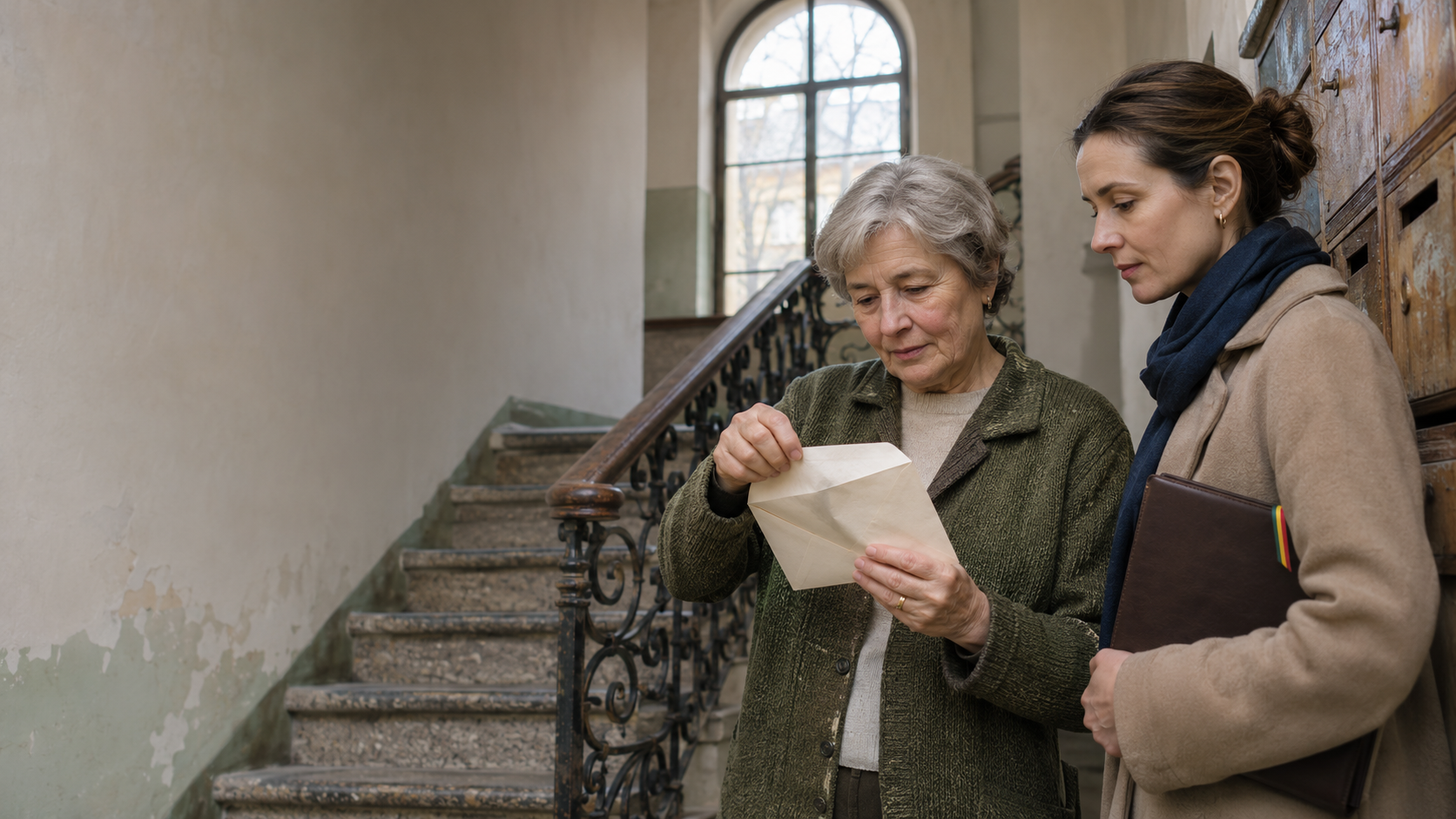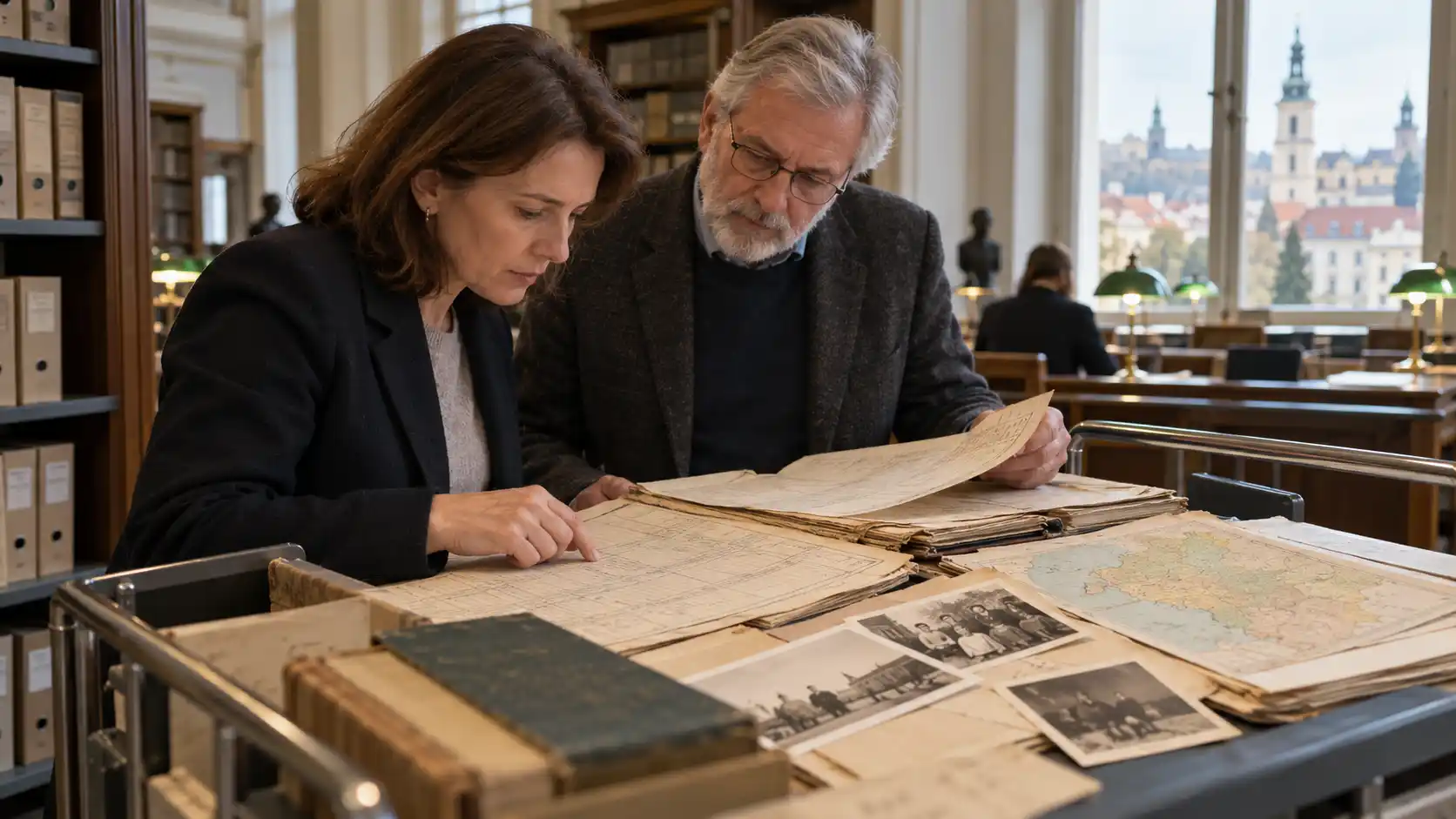
Historical voter lists and population census records can provide important clues for Americans researching their Lithuanian ancestors. These documents may establish where a family lived, identify household members, and help reconstruct an ancestor’s connection to Lithuania during the period of independence between 1918 and 1940.
For descendants seeking Lithuanian citizenship restoration, such records can be particularly useful when original passports, identity certificates, or other direct evidence of citizenship have been lost.
However, appearing in a historical census or electoral record does not automatically establish that an ancestor held Lithuanian citizenship. The evidentiary value depends on the document’s content, its historical context, and its relationship to other surviving records.
Understanding how Lithuanian voter lists before 1940 and interwar census materials were created can help families distinguish genealogical information from evidence relevant to citizenship restoration.
Why Pre-1940 Records Matter for Lithuanian Citizenship Restoration
Lithuania declared its restored independence on February 16, 1918, and remained an independent republic until Soviet occupation in June 1940. Records created by Lithuanian institutions during this period may help establish an individual’s identity, residence, administrative status, and connection to the Lithuanian state.
Under Lithuanian citizenship legislation, individuals who held citizenship of the Republic of Lithuania before June 15, 1940, and qualifying descendants have a right to seek restoration of citizenship.
For Americans tracing their family history, the main evidentiary challenge is often establishing that an ancestor was a Lithuanian citizen during the relevant historical period rather than simply demonstrating Lithuanian ancestry.
An ancestor’s place of birth, ethnic background, or residence in Lithuania may be relevant but is not necessarily sufficient on its own.
Historical census records, electoral materials, municipal registers, and other administrative documents can help reconstruct circumstances that are difficult to establish through surviving family papers.
These materials are particularly valuable when they identify the same ancestor across several independent sources.
Lithuanian Voter Lists Before 1940: What They May Reveal
Lithuanian electoral records are an often-overlooked category of historical documentation. Depending on the election, locality, and surviving archival materials, electoral lists may contain information about individuals who were eligible to participate in voting.
During the interwar republic, parliamentary elections took place in 1920, 1922, 1923, 1926, and 1936.
Voting eligibility was connected to the legal requirements established for the relevant election, including citizenship and age. Consequently, an authentic electoral register identifying a qualified voter may provide useful evidence when researching an ancestor’s legal relationship with the Lithuanian state.
What Information Can Historical Electoral Rolls Contain?
The information available in a surviving electoral record depends on the type of document and the procedures used by the responsible electoral authority.
Some records may identify voters by name and residential locality. Others may preserve additional administrative details or references to electoral districts.
For genealogical and citizenship research, potentially useful information includes:
-
The ancestor’s name as recorded by Lithuanian authorities.
-
The town, village, municipality, or electoral district associated with the individual.
-
The approximate period during which the person appeared in an official electoral record.
-
Details that help distinguish individuals with similar names.
-
Evidence of inclusion in an electoral register governed by citizenship-based voting rules.
Not every surviving electoral document is a voter register. Candidate lists, election results, administrative correspondence, and statistical summaries serve different purposes.
A document listing candidates or election officials should not be interpreted as a complete list of voters.
Can Inclusion in a Voter List Prove Lithuanian Citizenship?
A verified entry in a historical voter register may be significant because participation in interwar Lithuanian parliamentary elections was generally tied to Lithuanian citizenship.
Nevertheless, a voter list is not equivalent to a Lithuanian passport or an official certificate explicitly confirming citizenship.
Its evidentiary strength depends on several factors, including the applicable voting rules, the identity of the person listed, the authenticity of the record, and whether the document establishes actual eligibility rather than merely recording an administrative reference.
A register that identifies an individual as an eligible voter may be more persuasive than an election-related document that only mentions the same name.
The Lithuanian authorities may consider such evidence alongside other historical documents. Whether it is sufficient depends on the complete documentary record and the applicable citizenship requirements.
The 1923 Lithuanian Census and Its Genealogical Importance
The 1923 population census was an important demographic survey conducted in independent Lithuania. It provides historical context for understanding the population, settlements, households, and social composition of the country during the interwar period.
For Americans researching Lithuanian ancestry, the 1923 census can help establish where relatives may have lived during a period relevant to the country’s citizenship history.
However, an important distinction must be made between published census statistics and original individual or household records.
What Information Is Available From the 1923 Census?
Published results of the 1923 Lithuanian census contain demographic information about the population and its distribution across the territory covered by the enumeration.
These publications may provide information about population size, localities, demographic characteristics, and other statistical categories.
They can help researchers understand the historical environment in which their ancestors lived.
Individual census materials, where surviving and accessible, may offer more specific genealogical information than published statistical summaries.
Potentially relevant details could include names, household relationships, residence, ages, occupations, and other information collected through the historical enumeration.
However, researchers should not assume that a complete, searchable collection of individual 1923 census records exists for every Lithuanian locality.
The survival, preservation, and accessibility of original census documentation must be verified with the relevant archival institution.
Does a 1923 Census Entry Establish Lithuanian Citizenship?
A census entry may establish that an individual was recorded as living in a particular place at the time of enumeration.
It does not necessarily establish Lithuanian citizenship.
Population censuses can include individuals with different legal statuses, and the information recorded depends on the methodology and questions used.
For this reason, proof of historical residence should be distinguished from proof of citizenship.
A census record containing an explicit citizenship designation may have greater evidentiary relevance than one recording only a name and address. Even then, the designation must be interpreted according to the historical document’s terminology.
An ancestor’s appearance in the 1923 census is therefore best understood as potentially useful supporting evidence rather than automatic confirmation of citizenship.
Voter Lists vs. Census Records: Differences in Evidentiary Value
Although both types of records may establish a historical connection to Lithuania, they were created for different administrative purposes.
Electoral registers were associated with determining or recording participation in elections. Depending on the applicable rules, inclusion in a list of qualified voters may support an inference about citizenship.
Population censuses were designed primarily to enumerate and describe the population. Their central purpose was demographic rather than the formal certification of citizenship.
This distinction affects how the records should be interpreted.
For example, suppose an ancestor appears in a 1923 municipal population record and a verified 1926 parliamentary voter register.
The population record may help establish residence and identity, while the electoral entry may provide additional information relevant to the ancestor’s legal status.
Together, these documents could be more informative than either record alone.
However, the existence of both records would still require an assessment of whether they refer to the same person and what conclusions can reasonably be drawn from their contents.
Where to Find Lithuanian Interwar Census and Electoral Records
Locating original Lithuanian census records and electoral materials often requires research in state archives rather than ordinary online genealogy databases.
The availability of historical documents varies considerably between municipalities and archival collections.
Lithuanian Central State Archives
The Lithuanian Central State Archives preserves extensive documentation associated with the institutions and administration of the independent Lithuanian state.
Its collections may contain records relevant to citizenship, identity, residence, public administration, and other aspects of interwar life.
For Lithuanian citizenship restoration research, it is an important institution to consider when investigating historical administrative documents.
An archival inquiry should identify the ancestor as precisely as possible and explain the type of record being sought.
Researchers interested in electoral records can ask whether voter registers, election-related administrative files, or municipal records survive for a specified locality and election year.
For population records, it is useful to distinguish original individual census materials from published statistical reports.
Lithuanian State Historical Archives
The Lithuanian State Historical Archives is another important institution for reconstructing family history.
Its collections include historical civil and religious records that may help establish births, marriages, deaths, and family relationships.
These documents can be particularly useful for connecting an ancestor identified in an electoral or population record to later generations.
For example, a birth record might establish the parentage of an individual whose name appears in an interwar municipal register.
Such connections are essential because a historical document has limited value to an applicant if it cannot be reliably linked to the correct ancestor.
Local and Municipal Archival Collections
Some relevant records may have originated with local government institutions.
Municipal registers, household records, residence documentation, and election administration files may provide information not preserved in national statistical publications.
The present archival location of such documents depends on historical transfers, institutional changes, and preservation practices.
Researchers should therefore avoid assuming that every electoral or census record is held in a single archive.
The historical municipality and administrative district can be important search parameters.
How to Research Lithuanian Ancestors in Historical Population Records
Research into Lithuanian voter lists and census materials is usually more effective when it begins with a clearly identified ancestor rather than a general surname search.
For Americans whose relatives emigrated from Lithuania, records created in the United States may provide the information necessary to identify the correct Lithuanian locality.
Step 1: Establish the Ancestor’s Identity
Begin by collecting the ancestor’s full name, known surname variations, approximate date of birth, and family relationships.
Passenger manifests, U.S. naturalization documents, marriage certificates, and death records may help identify these details.
Pay particular attention to the names of parents and spouses, because they may distinguish the correct individual from others with similar names.
Step 2: Identify the Historical Place of Residence
Determine where the ancestor lived during the interwar period.
The place identified in a U.S. document may refer to a historical province, administrative district, or town whose name has changed.
Records describing an ancestor as having been born in Russia, Poland, Kovno, or Vilna require careful interpretation.
Political boundaries and administrative classifications changed over time. A modern geographic location should not automatically be treated as having belonged to the interwar Lithuanian Republic.
The precise locality is important when identifying relevant historical archives.
Step 3: Determine Which Records May Exist
Once the locality is known, investigate the archival collections associated with the relevant period.
For voter lists, identify the elections that took place while the ancestor was living in Lithuania and consider whether the individual would have met the voting requirements.
For census research, determine whether individual or household records survive for the locality or whether only aggregated statistical information is available.
It may also be useful to investigate municipal residence books and other population-related registers.
Step 4: Compare the Records With Other Evidence
A historical entry becomes more useful when it can be connected to independent documentation.
Compare names, dates, family relationships, addresses, and geographical references.
A consistent combination of records may help establish that the individual appearing in a Lithuanian archive was the same person who later emigrated to the United States.
Discrepancies should be investigated rather than ignored.
Step 5: Evaluate the Evidence in Its Legal Context
Finally, determine what the documents actually establish.
A residence record may confirm a historical location. An electoral register may provide evidence associated with voting eligibility. A passport or identity document may establish citizenship more directly.
These distinctions matter when evaluating Lithuanian citizenship records before 1940.
The final assessment should consider both the ancestor’s citizenship status and the documents connecting that person to the present-day descendant.
Using Census and Electoral Evidence When an Old Passport Is Missing
Historical census and voter records can be particularly relevant when the family no longer possesses an original Lithuanian passport.
Lithuanian citizenship legislation identifies several types of documents that can establish citizenship held before June 15, 1940.
These include historical Lithuanian passports, certain identity certificates, documents relating to service in the Lithuanian armed forces or civil service, and records containing direct references to Lithuanian citizenship.
Where such documents are unavailable, other records concerning historical residence, employment, education, and related circumstances may be considered.
Electoral and census materials may contribute to this broader evidentiary picture, although their admissibility and weight depend on their content.
For example, an archival voter entry might help support the conclusion that an ancestor possessed the legal status required to vote.
A corresponding residence record could help confirm that the individual lived in the relevant municipality.
If additional identity records connect the same individual to a known family line, the documents may collectively strengthen the historical reconstruction.
Nevertheless, several indirect documents do not automatically become conclusive proof simply because they are consistent.
The authorities must still evaluate whether the evidence establishes the legally relevant facts.
Common Problems With Historical Lithuanian Records
Research involving interwar Lithuanian voter lists and census documents frequently encounters difficulties caused by incomplete archives, changing personal information, and historical political boundaries.
Missing or Incomplete Archival Collections
Some records were destroyed, lost, transferred, or preserved only in fragmentary form.
Others may survive without comprehensive indexes, making name-based searches difficult.
An unsuccessful archival search does not necessarily demonstrate that the ancestor was absent from the original historical record.
It may simply mean that the relevant documentation has not survived or cannot currently be located.
Different Names and Surname Spellings
Lithuanian families may appear under different surname forms in Lithuanian, Polish, Russian, Yiddish, or American documents.
An individual recorded under a Lithuanian surname in an electoral register might later appear under a modified name in U.S. naturalization records.
Changes involving diacritical marks, patronymics, grammatical endings, or translated names can create apparent inconsistencies.
Such discrepancies may be explainable, but they require supporting information to establish identity continuity.
Historical Borders and Administrative Changes
Interwar Lithuanian territory did not correspond exactly to the country’s modern borders.
The Vilnius region and Klaipėda region had particularly complex political and administrative histories.
A relative who lived in a location currently within Lithuania may not have been recorded by the institutions of the interwar Lithuanian Republic during every part of the period.
This is especially important when searching the 1923 census, because the enumeration did not cover every area that belongs to modern Lithuania.
The political and administrative status of the locality should therefore be established before drawing conclusions about missing records or an ancestor’s citizenship.
Confusing Ethnicity With Citizenship
Historical records may distinguish nationality, ethnic origin, native language, residence, and citizenship.
These categories should not be treated as interchangeable.
An ancestor could identify ethnically as Lithuanian without necessarily holding citizenship of the interwar Lithuanian Republic.
Conversely, an individual belonging to a different ethnic community could have been a Lithuanian citizen.
For citizenship restoration purposes, the relevant question concerns legal citizenship, not ethnicity alone.
Can Family Members Use the Same Historical Records?
Descendants of the same Lithuanian ancestor may rely on overlapping historical evidence.
For example, siblings may both identify a grandfather in the same electoral register or municipal population record.
The historical document may be relevant to both individuals because it concerns their shared ancestor.
However, each applicant must establish the necessary family relationship and satisfy the legal conditions applicable to their individual circumstances.
One sibling may possess a complete chain of birth and marriage certificates, while another may face discrepancies involving a parent’s name, a missing civil record, or a different legal basis for citizenship restoration.
Differences in personal documents, migration history, and the conditions for retaining another citizenship can also affect the assessment.
Consequently, approval of one sibling’s citizenship restoration does not automatically guarantee an identical outcome for another.
Similarly, a request for additional evidence in one family member’s case does not necessarily invalidate the historical documents used by another applicant.
The significance of shared archival evidence must be considered within each individual’s complete documentary record.
What Makes an Interwar Record Useful for Citizenship Restoration?
The value of historical documentation depends on the specific facts it establishes and its reliability.
A particularly useful record should identify the ancestor with sufficient precision, relate to the relevant historical period, and provide information connected to citizenship, identity, or residence.
Its value increases when independent documents confirm the same details.
For example, a verified electoral entry identifying an eligible voter may be significant if the applicable election rules required Lithuanian citizenship.
A corresponding household register may help confirm the person’s residence, while birth and marriage certificates establish the connection to subsequent generations.
By contrast, a general census publication showing that a village had a particular population cannot establish that a named ancestor was a Lithuanian citizen.
Similarly, a name appearing in an election-related publication may have limited value if the document does not identify the person’s legal status.
The central objective is to establish a coherent, verifiable connection between the historical individual, the relevant citizenship period, and the descendant researching restoration.
Frequently Asked Questions
Can Lithuanian voter lists before 1940 prove an ancestor’s citizenship?
Lithuanian voter lists before 1940 may provide supporting evidence of an ancestor’s citizenship when the record identifies an eligible voter under rules requiring Lithuanian citizenship. However, inclusion in an electoral document does not automatically establish citizenship. The record’s purpose, authenticity, date, and relationship to other evidence must be evaluated.
Are individual records from the 1923 Lithuanian census available online?
Researchers should not assume that complete individual records from the 1923 Lithuanian census are available online. Published census statistics are historical resources, but surviving individual or household documentation may be incomplete, restricted, or held in archival collections. Availability should be verified for the particular locality and record series.
Can a Lithuanian census record replace a pre-1940 passport?
A Lithuanian census record does not automatically replace a historical passport as proof of citizenship. It may provide supporting information about residence, identity, or family relationships. When direct citizenship documents are missing, the authorities may evaluate other historical records together, depending on the applicable legal requirements and the evidence available.
Where can I search for Lithuanian electoral rolls from the interwar period?
Lithuanian electoral rolls and related administrative documents may be found in collections associated with interwar government institutions and local authorities. The Lithuanian Central State Archives is an important starting point. Researchers should identify the relevant locality and election year and verify whether the required records have survived.
Does appearing in the 1923 census mean my ancestor was a Lithuanian citizen?
No. A census entry may demonstrate that an ancestor was recorded as living in a particular locality, but residence and citizenship are different legal concepts. The significance of the record depends on the information collected and whether it identifies citizenship directly. Additional documentation may be necessary to establish the ancestor’s legal status.
Can siblings rely on the same historical voter or census records?
Yes. Siblings may rely on the same historical documents concerning a shared ancestor, provided the records are relevant to their respective cases. However, each applicant must establish the required family relationship and satisfy the applicable legal conditions. Approval of one sibling’s citizenship restoration does not automatically guarantee approval for another.
Find out if you qualify — free
Send us your family details and a Lithuanian citizenship specialist will review your case and explain your options.
Start free eligibility check