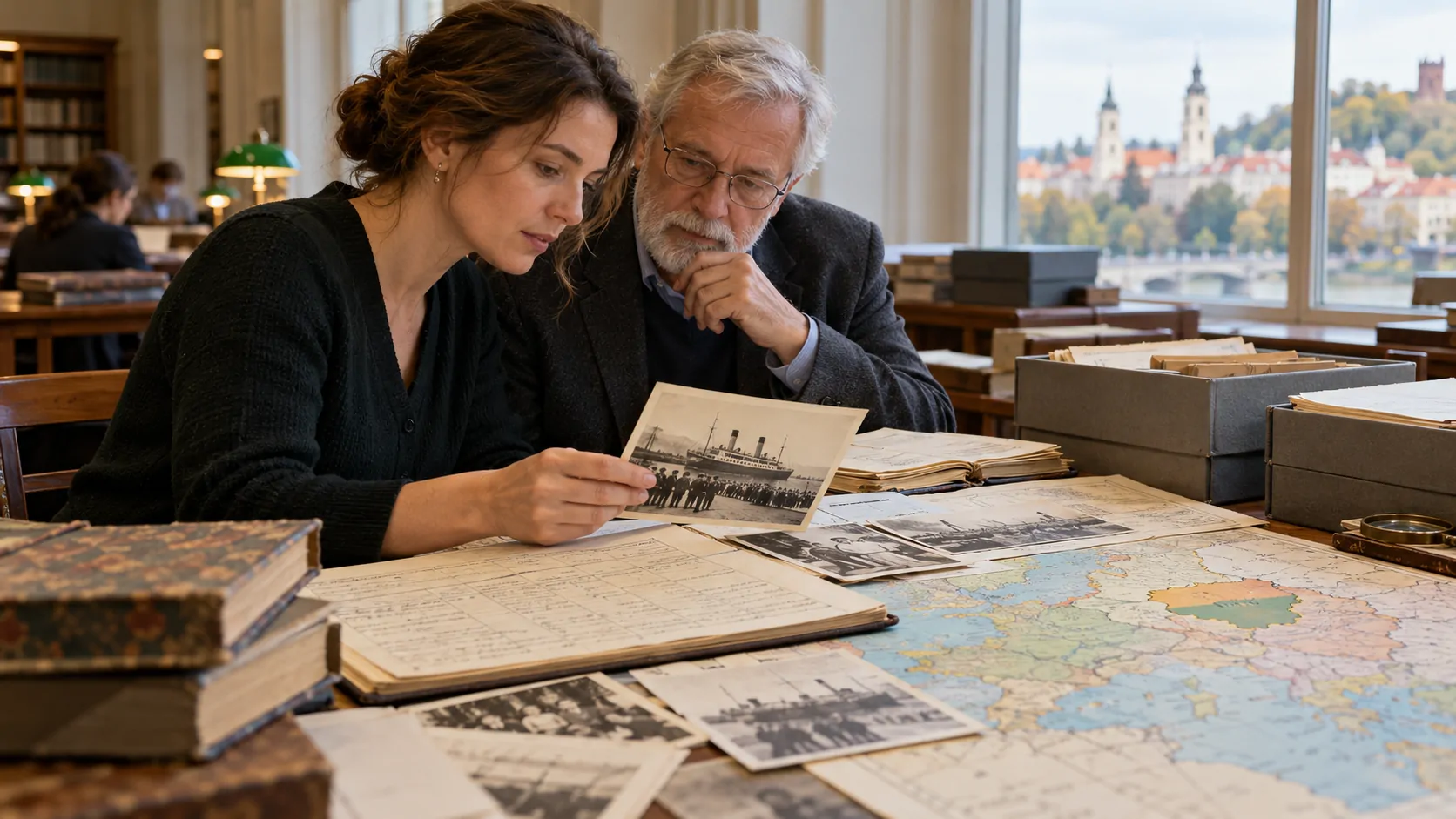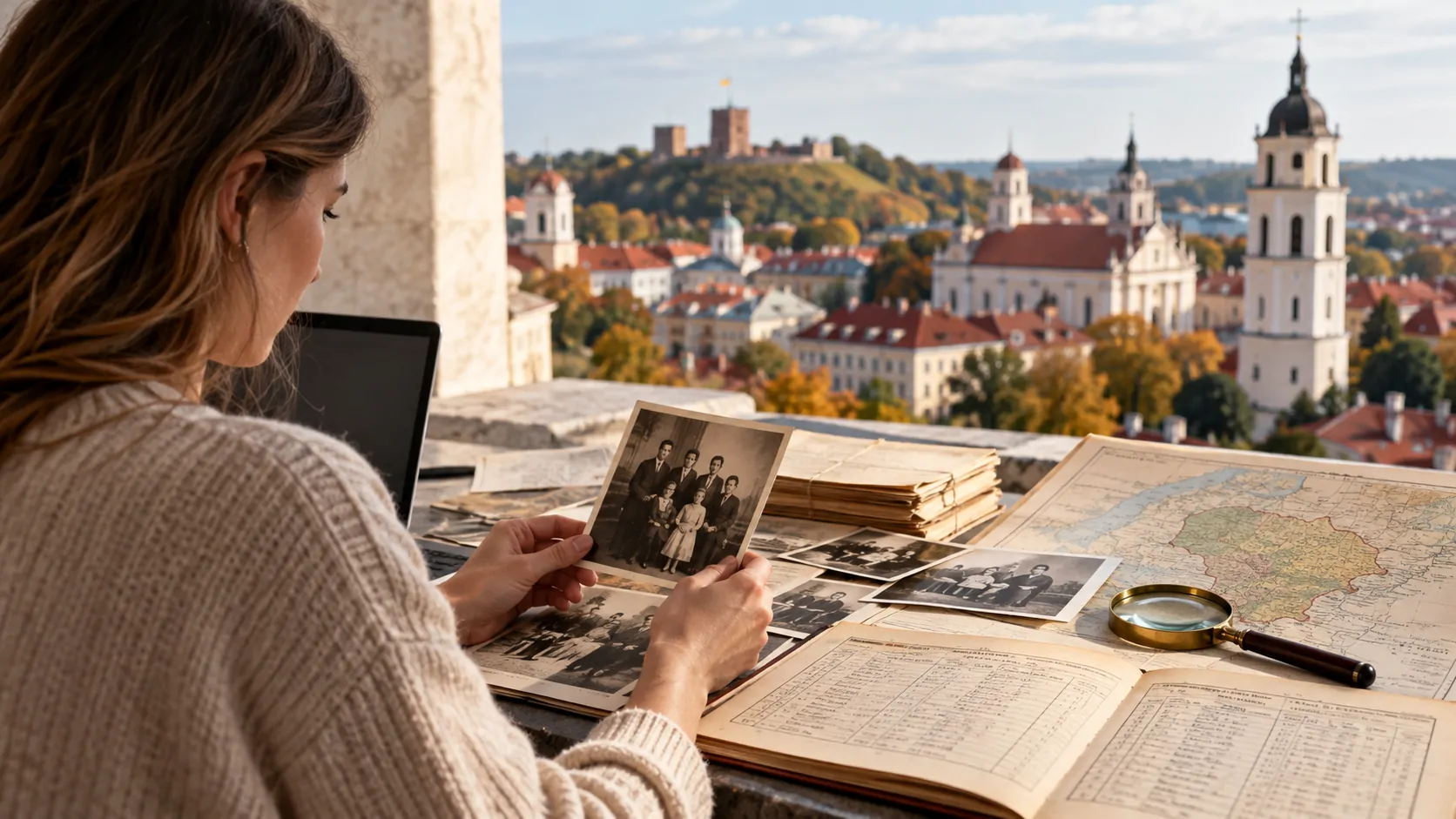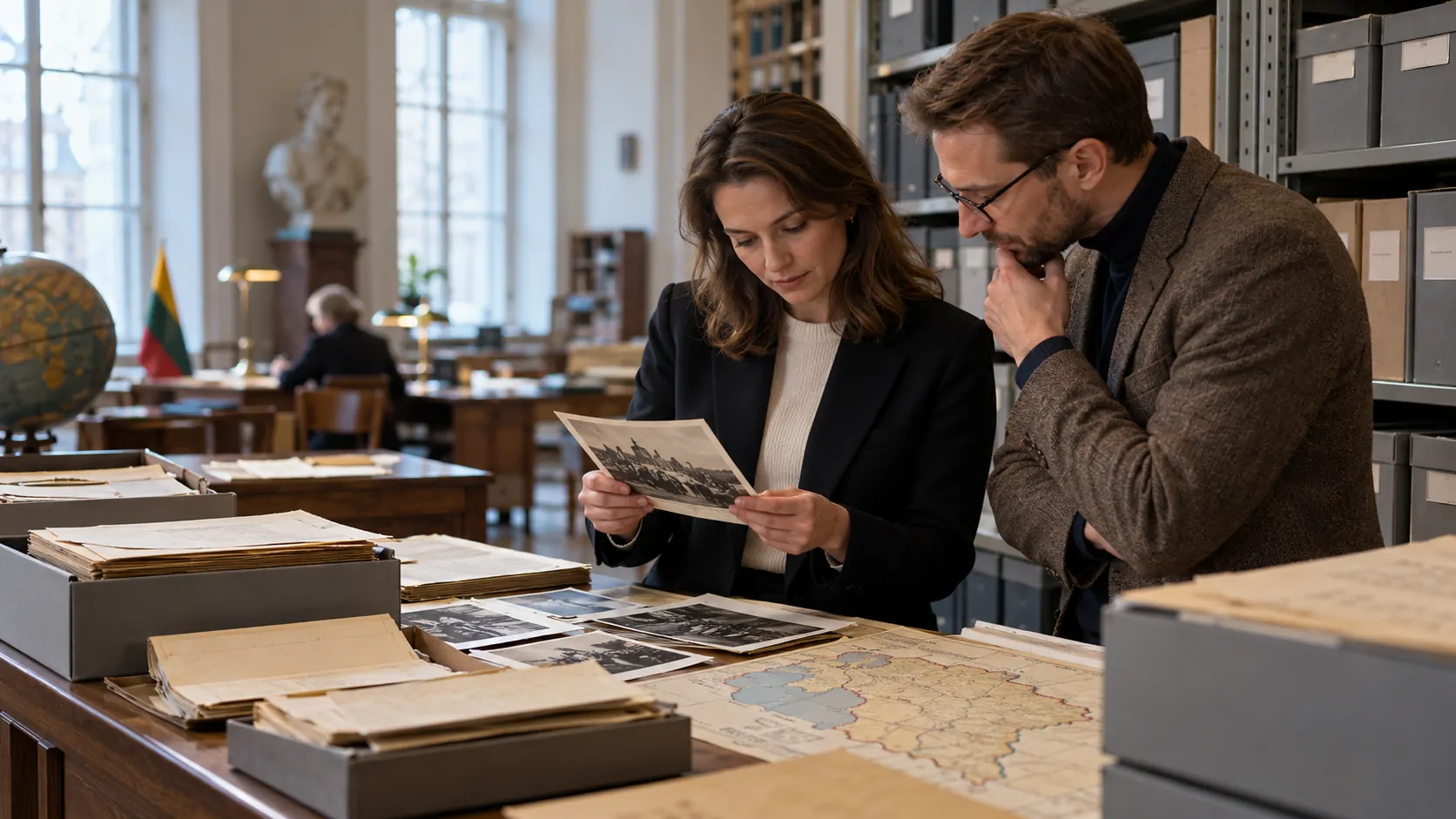
Thousands of Lithuanians fled their homeland during World War II and spent the following years in displaced persons (DP) camps across Germany and other parts of Europe. For their descendants living in the United States, these camps left behind valuable historical documents that can help reconstruct family histories and support Lithuanian citizenship restoration.
Lithuanian displaced persons camp records may contain information about an ancestor’s birthplace, nationality, family relationships, movements through Europe, and eventual immigration to the United States. Some documents also identify former residences in Lithuania or provide clues about citizenship status before the Soviet occupation.
However, a DP camp record does not automatically establish Lithuanian citizenship or guarantee eligibility for restoration. Its evidentiary value depends on the information recorded, its consistency with other documents, and the legal requirements applicable to the descendant.
Understanding where to find these records and how to interpret them can help families determine which historical facts they can document and which require additional archival research.
In short
- Thousands of Lithuanians spent the post-war years in displaced persons (DP) camps, mostly in Germany.
- DP records can show birthplace, nationality, family members, camp locations and resettlement to the U.S.
- They help prove departure from Lithuania but do not automatically prove citizenship before 15 June 1940.
- Start with the Arolsen Archives; UNRRA and IRO files and U.S. immigration records add detail.
- Missing DP records do not end the research — passports, archive and immigration records can replace them.
What Were Lithuanian Displaced Persons Camps?
After World War II, large numbers of European refugees were unable or unwilling to return to their countries of origin. Many Lithuanians had fled westward during the Soviet and German occupations, particularly as Soviet forces advanced in 1944.
Following Germany’s defeat in 1945, Lithuanian refugees were accommodated in displaced persons camps established throughout the Allied occupation zones. Many remained in these facilities while awaiting resettlement opportunities.
Lithuanian Displaced Persons Camps in Germany
Germany became a major center for Lithuanian displaced persons after the war. Lithuanian communities formed in camps and settlements in areas including Augsburg, Hanau, Kempten, and other locations.
Camp residents established schools, religious organizations, cultural institutions, and community associations. Some camps operated for several years as international authorities arranged refugee assistance and overseas migration.
The records produced by these institutions can reveal important details about Lithuanian families who eventually settled in the United States, Canada, Australia, or elsewhere.
UNRRA and IRO Refugee Administration
Two international organizations played significant roles in documenting displaced persons.
The United Nations Relief and Rehabilitation Administration (UNRRA) provided humanitarian assistance and administered many displaced persons facilities during the immediate postwar period.
The International Refugee Organization (IRO) subsequently assumed responsibilities for identifying, assisting, and resettling refugees.
Both organizations generated records relating to displaced persons’ identities, family circumstances, residence histories, and eligibility for resettlement.
Today, surviving UNRRA displaced persons records and IRO refugee records are important sources for reconstructing the movements of Lithuanian refugees after World War II.
What Information Can Lithuanian DP Camp Records Contain?
The information available depends on the document type, the organization responsible for creating it, and the completeness of the surviving archival collection.
Some Lithuanian DP camp records contain only basic identifying information. Others provide detailed biographical and migration histories.
Personal Identification and Family Details
Displaced persons registration cards and individual case files may contain:
-
Full name and alternative spellings.
-
Date and place of birth.
-
Nationality or declared citizenship.
-
Names of spouses, parents, and children.
-
Previous addresses and places of residence.
-
Occupation or educational background.
-
Camp registration numbers and dates.
-
Previous or subsequent camp locations.
Family registration records can be especially useful when researching relatives whose original Lithuanian birth or marriage certificates are missing.
Nevertheless, the relationship recorded in a camp document may require confirmation through civil registration or other official records.
Refugee Movements and Migration History
Some records document an individual’s movements between camps, places of temporary residence, and eventual destinations abroad.
These details may help establish a chronology of departure from Lithuania and subsequent resettlement.
For descendants investigating Lithuanian refugee records after World War II, camp registration dates, travel documents, and resettlement information may provide a clearer picture of an ancestor’s migration.
A record confirming someone’s presence in Germany in 1946, for example, can support a reconstruction of their postwar location. It does not necessarily establish the exact date they left Lithuania or the circumstances of that departure.
Nationality and Citizenship References
DP registration forms sometimes identify an individual as Lithuanian or record a nationality designation.
These entries can support historical identity research, but nationality, ethnicity, place of birth, and legal citizenship are not interchangeable.
An individual described as Lithuanian in a refugee document was not necessarily recorded as a citizen of the Republic of Lithuania before June 15, 1940.
This distinction is particularly important when considering the use of Lithuanian DP camp records for citizenship restoration.
Where to Find Lithuanian Displaced Persons Camp Records
Surviving records are distributed among international tracing institutions, national archives, historical collections, and immigration authorities.
No single repository contains a complete register of every Lithuanian refugee who lived in a DP camp.
Arolsen Archives and Displaced Persons Records
The Arolsen Archives in Germany preserve extensive documentation concerning people affected by Nazi persecution and postwar displacement.
Their collections include registration materials, individual displaced persons files, camp lists, and documents concerning emigration.
Researchers looking for Arolsen Archives Lithuanian displaced persons records can begin with the institution’s online archive and its collections relating to the registration and care of displaced persons.
Useful information for a search includes an ancestor’s full name, approximate birth date, birthplace, and known postwar locations.
Searches should also account for alternative spellings. A Lithuanian surname may have been recorded differently by German, English-speaking, or other administrative personnel.
Not every surviving record is available digitally, and an unsuccessful online search does not establish that no documentation exists.
UNRRA and International Refugee Organization Files
Historical files associated with UNRRA and the IRO may include personal registration forms, camp administration documents, resettlement correspondence, and records of assistance.
Some surviving records are incorporated into Arolsen Archives collections, while others are preserved by separate institutions.
Researchers should distinguish between individual case files and general administrative records. A collection containing reports about a refugee camp may document its history without identifying every resident.
When searching for IRO refugee records of Lithuanian ancestors, details about the camp, resettlement country, and approximate migration period may help identify the most relevant archival holdings.
United States Immigration and Naturalization Archives
For Lithuanian descendants living in America, postwar immigration documents can supplement European refugee records.
The U.S. National Archives and Records Administration (NARA) preserves historical immigration collections, including passenger arrival records and certain Alien Files.
The U.S. Citizenship and Immigration Services (USCIS) also maintains historical immigration records, although the appropriate access procedure depends on the record series, dates, and whether the file has been transferred to NARA.
Relevant documents may include immigration visa information, arrival manifests, naturalization petitions, and records identifying previous residences.
Importantly, the U.S. Displaced Persons Commission’s surviving administrative records generally do not contain individual displaced persons case files or comprehensive nominal lists.
A useful complementary research source is USCIS Genealogy Program records, which can help establish the immigration and naturalization history of certain ancestors.
Lithuanian State Archives
Lithuanian archives are particularly important when refugee documentation identifies an ancestor but does not establish their prewar legal citizenship.
The Lithuanian Central State Archives may hold historical records relating to residence, identity, education, employment, and citizenship during the interwar period.
A successful investigation may therefore combine DP camp documentation from Germany with prewar records preserved in Lithuania.
This approach allows researchers to connect an ancestor’s postwar refugee identity with evidence about their earlier life in the Republic of Lithuania.
| Source | What you may find |
|---|---|
| Arolsen Archives | DP registration records, individual files, camp documentation |
| UNRRA and IRO files | Identity, family, camp residence, resettlement |
| U.S. immigration and naturalization archives | Arrival, later U.S. citizenship |
| Lithuanian state archives | Prewar records that can prove citizenship |
How Displaced Persons Records May Support Lithuanian Citizenship Restoration
Lithuanian citizenship restoration is governed by specific legal requirements, not simply by an individual’s Lithuanian ancestry or refugee background.
Under the Lithuanian citizenship framework, persons who held citizenship of the Republic of Lithuania before June 15, 1940, and qualifying descendants may have the right to reinstate citizenship.
For descendants seeking to retain another nationality, including U.S. citizenship, the applicable exceptions to the general restriction on multiple citizenship must also be considered.
Relevant provisions address people who departed Lithuania before March 11, 1990, or were exiled from occupied Lithuania, and their descendants.
For applicants relying on a prewar citizen ancestor, the qualifying generational relationships generally include children, grandchildren, and great-grandchildren.
Establishing an Ancestor’s Departure from Lithuania
One important contribution of displaced persons records is their ability to document an ancestor’s presence outside Lithuania after World War II.
A camp registration from Germany may help establish where the ancestor lived following their departure.
Additional documents may clarify whether the individual resettled permanently abroad and provide a timeline connecting the original departure to later immigration.
However, registration in a German DP camp does not independently prove every historical circumstance relevant to citizenship restoration.
For example, the registration might document residence in Germany without specifying exactly when the individual departed Lithuania.
Other records may therefore be necessary.
Proving Lithuanian Citizenship Before June 15, 1940
Evidence of prewar Lithuanian citizenship is a separate and fundamental part of many restoration cases.
A displaced persons document might identify Lithuanian nationality or refer to previous citizenship, but its sufficiency as legal evidence must be assessed in context.
Stronger documentary evidence may include historical Lithuanian passports, official identity documents, citizenship records, or other records directly indicating citizenship.
When these documents are unavailable, historical residence and administrative records may contribute to a broader evidentiary assessment.
Research into how to prove Lithuanian citizenship before 1940 may therefore be necessary even when a family possesses extensive refugee documentation.
Connecting the Ancestor to the Applicant
Establishing that an ancestor was a Lithuanian citizen is only part of the documentary process.
The descendant must also establish the family relationship connecting them to that person.
Birth certificates, marriage records, name-change documentation, and other civil records may be needed to reconstruct successive generations.
DP camp documents identifying spouses and children can provide valuable supporting information. However, they do not automatically replace the civil records normally used to substantiate legal family relationships.
How to Find Lithuanian Displaced Persons Records Step by Step

A structured approach can reduce the risk of overlooking relevant documents or confusing people with similar names.
Step 1: Collect Existing Family Information
Begin with the documents already held by relatives, including old passports, letters, photographs, immigration papers, and naturalization certificates.
Record every known variation of the ancestor’s name.
Identify approximate birth dates, Lithuanian places of origin, postwar locations, and dates of arrival in the United States.
Even an old envelope mentioning a German town may help narrow the search to a specific camp or archival collection.
Step 2: Search Arolsen Archives
Search the online collections using the ancestor’s surname, first name, and alternative spellings.
Review potentially relevant records carefully, comparing dates of birth and family members rather than relying on names alone.
Where available, examine the original scanned documents instead of relying exclusively on indexed information.
A record may contain relevant handwritten details that are absent from the search index.
Step 3: Identify Camp Locations and Registration Dates
If a camp record is located, extract the camp name, registration number, dates, issuing organization, and any references to previous residences or subsequent transfers.
These details can guide searches in related collections.
Camp names may appear in historical German spellings or refer to administrative districts rather than the exact location remembered by family members.
Step 4: Compare U.S. Immigration Records
Locate passenger manifests, immigration documentation, and naturalization records associated with the same ancestor.
Compare names, birthplaces, dates, family relationships, and migration destinations.
Discrepancies should be documented rather than ignored.
A consistent sequence from Lithuania to a European refugee camp and then to the United States may help substantiate the family’s migration history.
Step 5: Investigate Prewar Lithuanian Documents
Use the birthplace and residence information from refugee and immigration records to guide research in Lithuanian archives.
Look for documents that may directly establish prewar citizenship or provide relevant historical supporting evidence.
The goal is to connect the person identified in postwar documents with the person recorded in Lithuania before June 15, 1940.
Common Problems When Researching Lithuanian DP Camp Records
Not every investigation produces a complete documentary trail. Several recurring problems can make identification and verification difficult.
Different Names and Spellings
Lithuanian names frequently underwent changes during migration.
Diacritical marks may have been omitted, surnames transliterated, and given names adapted to German or English spelling conventions.
For example, an ancestor may appear under one spelling in Lithuanian records and another in U.S. immigration documents.
These variations do not necessarily indicate different people, but they should be supported by corroborating details.
Research involving name changes in Lithuanian citizenship records may be especially relevant when the family surname changed after immigration.
Missing or Incomplete Refugee Files
Records may be missing because they were never created, did not survive, were transferred between institutions, or have not been digitized.
Some displaced persons lived outside formal camps or moved repeatedly between temporary residences.
Consequently, the absence of a DP camp registration should not be treated as definitive evidence that an ancestor was not a wartime refugee.
Alternative immigration, civil, religious, and archival records may help reconstruct the missing information.
Differences Between Ethnicity and Legal Citizenship
Historical documents sometimes use expressions such as Lithuanian nationality without clarifying whether the reference concerns ethnicity or citizenship.
This distinction can affect the interpretation of the evidence.
A person born in Lithuania was not automatically a citizen of the independent Republic of Lithuania throughout the period relevant to restoration.
Similarly, a refugee’s self-reported nationality does not necessarily constitute authoritative proof of prewar citizenship.
Inconsistent Dates and Birthplaces
A refugee file might contain a birthplace or date that differs from the information in an American naturalization record.
Such inconsistencies may result from transcription errors, changes in geographical names, language differences, or inaccurate historical reporting.
For example, a Lithuanian birthplace could appear under Russian, Polish, German, or Lithuanian administrative terminology.
Researchers should establish whether the documents refer to the same individual rather than assume that every discrepancy is insignificant.
Can Displaced Persons Records Be Used as Citizenship Evidence?
Lithuanian displaced persons camp records can provide meaningful evidence in a citizenship restoration case, particularly when they document an ancestor’s postwar residence outside Lithuania and help reconstruct the family’s migration history.
Their strongest use is often as part of a broader collection of documents rather than as standalone proof.
The historical and legal questions should be considered separately.
First, the documentation must help establish the identity and history of the ancestor. Second, the available evidence must support the applicable citizenship requirements, including the ancestor’s prewar citizenship and the descendant’s qualifying family relationship.
Evidence concerning departure, exile, or overseas residence may also be relevant to the legal rules governing retention of another citizenship.
Authorities may request further records when the submitted material does not sufficiently establish these circumstances.
The fact that one family member successfully used refugee documents does not guarantee the same outcome for another descendant. Each applicant’s documentary evidence, family relationship, and applicable legal circumstances may differ.
Frequently Asked Questions
Can Lithuanian DP camp records prove my ancestor was a Lithuanian citizen?
DP camp records may support an ancestor’s identity, nationality, residence, and migration history, but they do not automatically prove citizenship of the Republic of Lithuania before June 15, 1940. A record explicitly identifying legal citizenship may be relevant evidence, although additional historical documents may be required to establish the fact under the applicable citizenship rules.
Where can I find Lithuanian displaced persons camp records online?
The Arolsen Archives are an important starting point because their online collections include displaced persons registration records, individual files, and camp documentation. Researchers can search by name and compare available personal information. Some records have not been digitized or may be preserved by other archives, including historical and immigration institutions in Europe and the United States.
Are UNRRA and IRO records useful for Lithuanian citizenship restoration?
Yes. Surviving UNRRA and IRO records may document an ancestor’s identity, family relationships, displacement, residence in refugee camps, and resettlement history. They can help substantiate relevant historical circumstances, particularly departure from Lithuania and subsequent residence abroad. However, their sufficiency depends on their contents, and separate evidence of prewar Lithuanian citizenship and family relationships may still be necessary.
What if my Lithuanian ancestor’s DP camp records are missing?
Missing camp records do not necessarily prevent further research or establish that the ancestor was ineligible for Lithuanian citizenship restoration. Alternative evidence may include historical Lithuanian passports, archival residence records, U.S. immigration files, naturalization documents, passenger manifests, and civil records. The usefulness of these alternatives depends on the particular facts that must be established.
Can descendants of Lithuanian WWII refugees restore citizenship without giving up U.S. citizenship?
Qualifying descendants of persons who held Lithuanian citizenship before June 15, 1940, may be eligible for restoration while retaining U.S. citizenship under applicable exceptions to Lithuania’s restrictions on multiple citizenship. Relevant circumstances include an ancestor’s departure from Lithuania or exile before March 11, 1990, together with the other statutory requirements. Refugee ancestry alone does not establish eligibility, and the outcome depends on the applicant’s individual circumstances and supporting evidence.
Is a displaced persons registration card enough for Lithuanian citizenship restoration?
A displaced persons registration card alone will generally not establish every fact required for citizenship restoration. It may document identity, nationality, family relationships, or postwar residence, but additional documents may be necessary to prove prewar Lithuanian citizenship and the descendant’s relationship to the qualifying ancestor. The evidentiary value of each card depends on its contents and how it fits with the other records submitted.
Find out if you qualify — free
Send us your family details and a Lithuanian citizenship specialist will review your case and explain your options.
Start free eligibility check