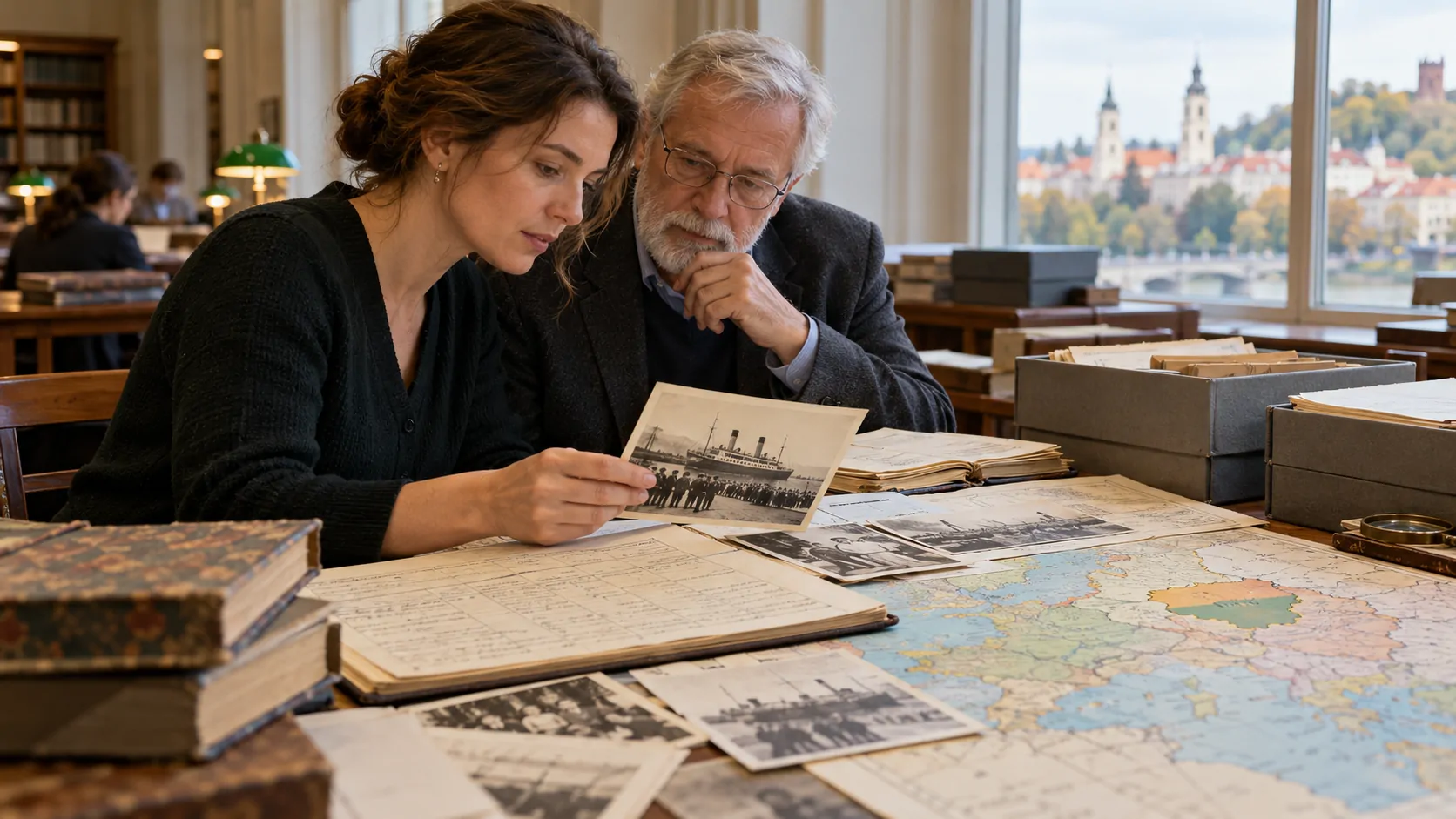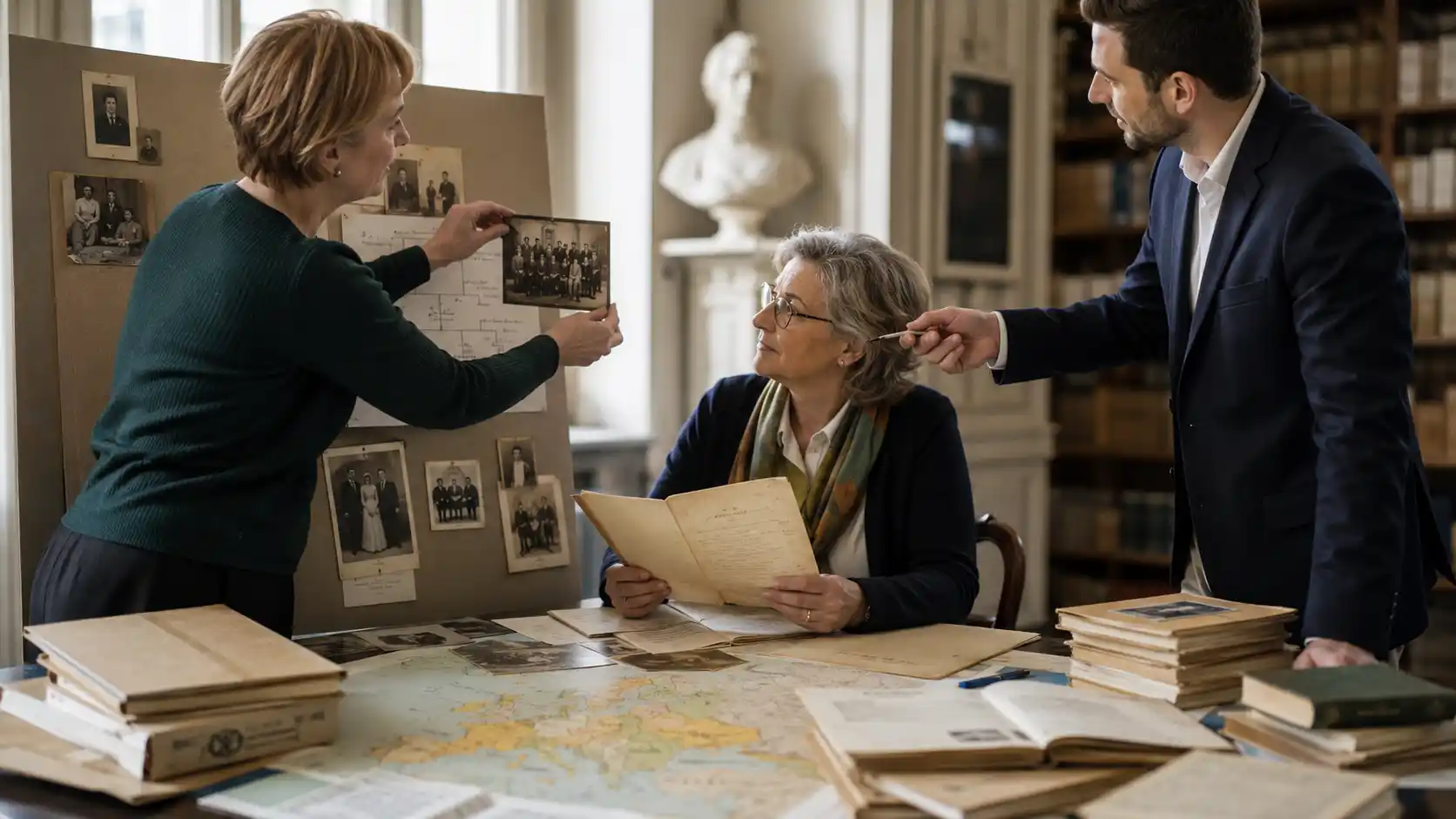
Many Americans with Lithuanian ancestry discover their family history through a grandparent or great-grandparent rather than through a parent. This often raises an important question: can Lithuanian citizenship by descent skip a generation?
In many cases, the answer is that Lithuanian citizenship restoration does not require every generation in the family line to have restored citizenship first. A parent may not need to become a Lithuanian citizen before a child or grandchild applies. However, this does not mean that the legal family line can be ignored. The applicant must still prove a direct line of descent from an eligible Lithuanian ancestor and show that the case fits the requirements for citizenship restoration.
For U.S.-based applicants, this distinction is important. Lithuanian citizenship by descent is not simply based on having Lithuanian ethnicity, a Lithuanian surname, or family stories about Lithuanian roots. It usually depends on whether a qualifying ancestor held Lithuanian citizenship during the relevant historical period, whether the applicant falls within the recognized line of descendants, and whether the documentary chain can be proven.
In short
- You can usually apply through a grandparent or great-grandparent even if your parent never restored Lithuanian citizenship.
- The skipped generation still has to be documented: your parent’s records connect you to the ancestor.
- The qualifying ancestor must have held Lithuanian citizenship before 15 June 1940.
- Restoration usually covers children, grandchildren and great-grandchildren; a great-great-grandparent is generally outside the limit.
- A U.S.-born parent or grandparent does not break the line — it is part of the chain you prove.
What It Means for Citizenship to “Skip a Generation”
When people ask whether Lithuanian citizenship by descent can skip a generation, they usually mean one of two things. The first is whether a person can apply through a grandparent or great-grandparent even if their parent never applied. The second is whether eligibility can continue indefinitely through older ancestors, such as a great-great-grandparent.
These are different questions. In many Lithuanian citizenship restoration cases, a person may rely on a parent, grandparent, or great-grandparent as the qualifying ancestor, depending on the facts. That can feel like citizenship has “skipped” the parent’s generation. In practice, however, the skipped generation is not skipped in the documentary sense. The applicant still needs to prove each civil-status link in the family line.
For example, if an applicant is applying through a Lithuanian-born grandparent, the parent’s birth record may still be needed to connect the applicant to that grandparent. If the case goes through a great-grandparent, the records of the grandparent and parent usually become part of the evidence chain. The legal focus is not whether each generation applied for citizenship, but whether the applicant can prove direct descent from a qualifying Lithuanian citizen.
Lithuanian Citizenship by Descent Through Grandparents
Lithuanian citizenship by descent through grandparents is one of the most common scenarios for Americans with Lithuanian roots. Many Lithuanian families emigrated to the United States during the early twentieth century or after the Second World War. As a result, the person researching eligibility today may be one or two generations removed from the ancestor who was born in Lithuania or held Lithuanian citizenship.
A grandchild may be eligible in many cases if the grandparent was a citizen of the Republic of Lithuania before June 15, 1940, and the other legal requirements can be supported by documents. The parent does not necessarily need to restore Lithuanian citizenship first for the grandchild to have a possible claim. The application is typically assessed on the applicant’s own right to restore citizenship through the direct family line.
This is why Lithuanian citizenship grandchildren eligibility often depends less on whether the parent took action and more on whether the historical and family documents are strong enough. The applicant may need records showing the grandparent’s Lithuanian citizenship, emigration history, birth and marriage records connecting the generations, and any name changes that occurred after immigration.
Lithuanian Citizenship by Descent Through Great-Grandparents
Lithuanian citizenship by descent through great-grandparents can also be possible in some situations, but it requires careful document review. Great-grandchildren may fall within the recognized descendant line when the qualifying ancestor held Lithuanian citizenship before the relevant date and the applicant can prove the family connection.
This is where many U.S. families face practical difficulties. The older the ancestor, the more likely it is that records will contain spelling variations, missing dates, changed surnames, or different versions of a birthplace. Lithuanian names may have been written in Lithuanian, Polish, Russian, Yiddish, German, or English depending on the time, location, and record type. U.S. records may also list the place of birth as Russia, Poland, Kovno, Kovna, Vilna, or another historical jurisdiction rather than Lithuania.
Lithuanian citizenship great grandchildren eligibility is therefore not only a question of ancestry. It is also a question of proof. A family story that a great-grandparent was Lithuanian may help guide research, but it usually needs to be supported by official documents showing citizenship, origin, emigration, and the direct family line.
Is There a Lithuanian Citizenship by Descent Generation Limit?
A key issue is the Lithuanian citizenship by descent generation limit. In standard restoration cases, the relevant family line is usually focused on a parent, grandparent, or great-grandparent who held Lithuanian citizenship before June 15, 1940. This means that a claim based only on a great-great-grandparent may be more difficult and may fall outside the usual scope unless another legal basis applies.
This is one reason the phrase “skip a generation” can be misleading. Lithuanian citizenship restoration may allow an applicant to apply through a grandparent or great-grandparent even if the intervening generation never restored citizenship. But that does not mean an applicant can keep moving the claim back through unlimited generations.
For example, an applicant whose great-grandparent was a Lithuanian citizen may have a potentially relevant family line. An applicant whose only known Lithuanian citizen ancestor was a great-great-grandparent may face a different legal analysis. In that situation, eligibility may depend on whether there is another qualifying ancestor closer in the line, whether a parent or grandparent had a separate citizenship status, or whether another Lithuanian citizenship procedure is relevant.
| You apply through | Must the parent restore citizenship first? | What you document |
|---|---|---|
| Parent | — | Your birth certificate and the parent’s proof of citizenship |
| Grandparent | No | You → parent → grandparent, plus the grandparent’s citizenship before 1940 |
| Great-grandparent | No | Every link: you → parent → grandparent → great-grandparent |
| Great-great-grandparent | — | Usually outside the generation limit; look for a closer qualifying ancestor |
Direct Line Matters More Than Whether a Parent Applied
Lithuanian citizenship restoration direct line requirements are central to these cases. The applicant generally needs to show an unbroken civil family connection from themselves to the qualifying ancestor. This does not mean each person in the chain must have applied for Lithuanian citizenship. It means each generation must be documented clearly enough to prove descent.
A direct line usually runs from the applicant to a parent, then to a grandparent, and possibly to a great-grandparent. Collateral relatives usually do not create eligibility by themselves. An aunt, uncle, cousin, or sibling may have useful documents, but the applicant still needs to prove their own direct descent from the qualifying Lithuanian citizen.
This is especially important in families where one relative has already restored Lithuanian citizenship. A successful case in the family may be helpful because it can indicate that relevant documents exist. However, it does not automatically guarantee that every relative is eligible. Each applicant’s relationship to the qualifying ancestor, personal documents, citizenship history, and family line still need to be reviewed.
What If the Parent Never Restored Lithuanian Citizenship?
A parent’s failure to restore Lithuanian citizenship does not necessarily prevent a child from applying through a grandparent or great-grandparent. In many cases, the applicant can pursue Lithuanian citizenship restoration through grandparents or great-grandparents directly, provided the documentary evidence supports the claim.
This is the practical situation many Americans describe as a skipped generation. The parent may have had no interest in citizenship, may have passed away, or may not have known that restoration was possible. The applicant may still be able to use the parent’s records as part of the family chain without requiring the parent to become a Lithuanian citizen first.
However, the parent’s documents can still be important. Birth certificates, marriage certificates, divorce records, name change records, and death certificates may be needed to connect the applicant to the Lithuanian ancestor. If the parent’s name appears differently across records, additional evidence may be needed to explain the discrepancy.
What If the Grandparent or Parent Was Born in the United States?
Many applicants assume that the family line is broken if their parent or grandparent was born in the United States. This is not always correct. Lithuanian citizenship by descent family line analysis is usually more focused on whether the applicant can prove descent from a qualifying Lithuanian citizen and whether the case meets the restoration criteria.
A U.S.-born parent or grandparent may still be part of the direct line connecting the applicant to a Lithuanian citizen ancestor. The key issue is not necessarily where every generation was born, but whether the qualifying ancestor held Lithuanian citizenship and whether the applicant can prove the chain of descent.
That said, birth outside Lithuania can make the evidence more complex. U.S. records may Americanize names, simplify Lithuanian endings, omit original places of birth, or record nationality inconsistently. These issues do not automatically defeat a case, but they may require additional documentation.
Documents Usually Needed to Prove the Family Line

A Lithuanian citizenship by descent case usually depends on two categories of evidence. The first category concerns the qualifying ancestor. These records may show that the ancestor held Lithuanian citizenship before June 15, 1940, lived in Lithuania during the relevant period, left Lithuania, or was exiled or displaced.
The second category concerns the applicant’s direct family line. These records typically include birth, marriage, death, naturalization, and name change documents that connect each generation. If the claim goes through a grandparent, the applicant usually needs to connect themselves to the parent and the parent to the grandparent. If the claim goes through a great-grandparent, one more generation must be documented.
For U.S. applicants, useful records may include U.S. birth certificates, marriage certificates, naturalization files, passenger records, census entries, military records, church records, and archival documents from Lithuania. Some documents may need to be apostilled, translated, or corrected if names, dates, or places are inconsistent.
Common Problems in Skipped-Generation Cases
Skipped-generation cases often become complicated because the applicant is relying on older records. The more distant the qualifying ancestor, the more likely it is that documents were lost, damaged, mistranscribed, or issued under different state authorities.
One common issue is surname variation. Lithuanian surnames often changed after immigration, especially when families settled in the United States. Endings may have been shortened, diacritics may have disappeared, and first names may have been translated or anglicized. A person named Kazys in one document may appear as Charles in another. A surname recorded in Lithuanian may appear in a Polish, Russian, Yiddish, or English form elsewhere.
Another issue is historical borders. A person may have been born in a place that is now associated with Lithuania but was recorded under another empire or state at the time. A U.S. document may list “Russia” or “Poland” as the birthplace even when the family came from territory that later became part of Lithuania or was historically connected to Lithuania. These details require careful review because Lithuanian citizenship restoration is not based only on modern geography.
Can Citizenship Pass Automatically to Future Generations?
Lithuanian citizenship restoration should not be confused with automatic citizenship transmission in every future generation. A person who restores Lithuanian citizenship may create a different situation for their children, especially depending on when the children were born and what citizenship rules apply at that time. However, this is separate from an adult applicant restoring citizenship through a historical ancestor.
For a U.S.-based applicant researching Lithuanian citizenship by descent skip generation questions, the key point is that historical restoration and future transmission are not the same issue. Restoration looks backward to a qualifying Lithuanian citizen ancestor and a documented family line. Future citizenship for children may depend on the parent’s citizenship status, the child’s date of birth, and the rules applicable to that child’s situation.
Because family structures and citizenship histories vary, it is safer to evaluate each generation separately rather than assume that one approval automatically resolves every descendant’s status.
How to Assess Whether Your Case Can Skip a Generation
The practical starting point is to identify the closest qualifying Lithuanian ancestor. If the ancestor is a parent, the case may be more direct. If the ancestor is a grandparent, the applicant should focus on proving the parent-child link across two generations. If the ancestor is a great-grandparent, the applicant should expect a more detailed documentary chain.
Next, the applicant should determine whether the ancestor held Lithuanian citizenship before June 15, 1940, and whether the available records support that conclusion. Birth in Lithuania may be relevant, but birth alone may not always be enough. Records showing citizenship, residence, passports, military service, official status, or other historical evidence may be important.
Finally, the applicant should review whether the ancestor’s emigration, naturalization, and family history create any issues. Lithuanian citizenship restoration can depend on details such as when the ancestor left Lithuania, whether they moved to another country, whether they naturalized elsewhere, and how the family line is documented. These facts can affect eligibility and should not be assumed from ancestry alone.
FAQ
Can Lithuanian citizenship by descent skip a generation?
In many cases, a person may apply through a grandparent or great-grandparent even if their parent never restored Lithuanian citizenship. However, the family line itself is not ignored. The applicant usually still needs to prove each generation with civil records and show direct descent from a qualifying Lithuanian citizen.
Can I apply for Lithuanian citizenship through my grandparents?
You may be able to apply for Lithuanian citizenship by descent through grandparents if at least one grandparent held Lithuanian citizenship before the relevant historical date and the rest of the eligibility requirements can be proven. The parent generally does not need to restore citizenship first, but the parent’s records may still be needed to connect you to the grandparent.
Can I apply through a Lithuanian great-grandparent?
Lithuanian citizenship by descent through great grandparents may be possible in some cases. The applicant usually needs to prove that the great-grandparent was a qualifying Lithuanian citizen and that the applicant is directly descended from that person through documented birth, marriage, and name records.
Is a great-great-grandparent enough for Lithuanian citizenship by descent?
A claim based only on a great-great-grandparent may fall outside the usual generation limit for standard Lithuanian citizenship restoration by descent. The case may need separate legal review to determine whether another qualifying ancestor exists or whether a different citizenship route may apply.
Does my parent need to become a Lithuanian citizen before I apply?
Not necessarily. If you qualify through a grandparent or great-grandparent, your parent may not need to restore Lithuanian citizenship first. Still, your parent’s documents may be essential for proving the direct family line.
What does “direct line” mean in Lithuanian citizenship restoration?
Direct line means the applicant must connect themselves to the qualifying ancestor through parent-child relationships. A grandparent or great-grandparent can be part of the direct line, but relatives such as cousins, aunts, uncles, or siblings usually do not establish eligibility by themselves.
What documents help prove Lithuanian citizenship grandchildren eligibility?
Documents may include birth certificates, marriage certificates, death certificates, name change records, naturalization files, Lithuanian archive records, passports, residence records, and evidence of emigration. The exact documents depend on the applicant’s family history and the available records.
Does having Lithuanian ancestry automatically make me eligible?
No. Lithuanian ancestry can be the starting point, but eligibility usually depends on whether a qualifying ancestor held Lithuanian citizenship, whether the applicant is within the recognized family line, and whether the documents prove the required facts.
Find out if you qualify — free
Send us your family details and a Lithuanian citizenship specialist will review your case and explain your options.
Start free eligibility check